Skip to content
Hosting control panel In development Open source · GPL-3.0

ArcPanel: a control panel for the modern Linux web server

Web domains, DNS zones, mail, databases, cron jobs, backups, firewall and SSL on one host, from one dashboard and one command line — plus what a hosting stack needs now: resellers, Node.js and Docker apps, and a file manager that works as the hosting user. ArcPanel is open source and runs on your own server.
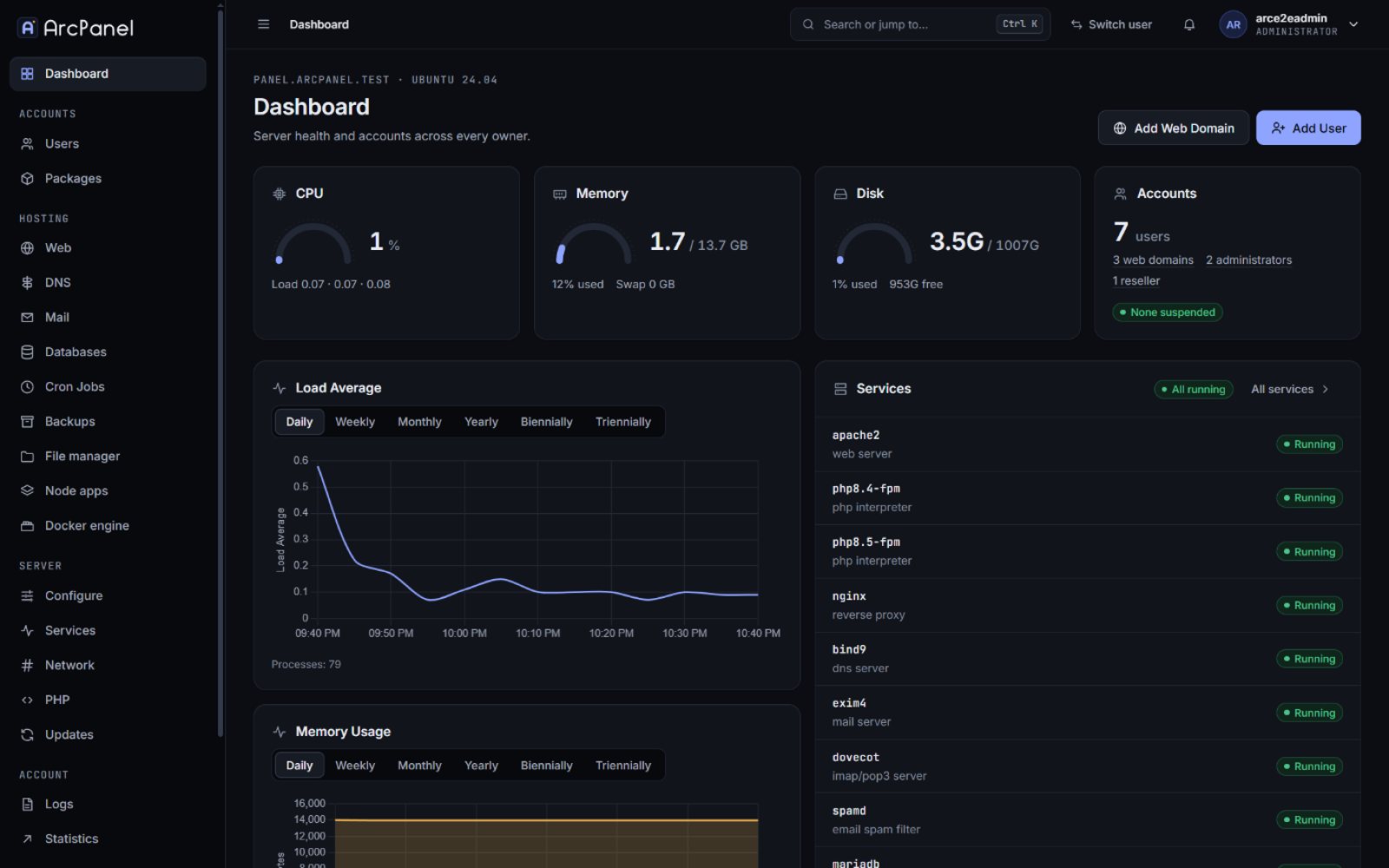
ArcPanel dashboard: CPU, memory, disk and account cards above a load average chart and the list of running services
700+v-* commands behind every screen, the CLI and the REST API
5Supported systems: Debian 12 and 13, Ubuntu 22.04, 24.04 and 26.04 LTS
7.4–8.5PHP versions side by side, chosen per web domain
GPL-3.0Open source; no per-account licence

The problem

Agencies and small hosting providers who run their own servers face an awkward choice. Commercial control panels charge per account, so the bill grows with every customer. The open-source panels cover the classic stack — web, mail, DNS, databases — but stop short of what sites need today: Node.js apps, containers, resellers with their own customers, and an interface that does not need a manual.

What it does

ArcPanel runs the hosting stack of one Linux server: NGINX and Apache with PHP-FPM, BIND, Exim and Dovecot, MariaDB or PostgreSQL, Let’s Encrypt, backups and a firewall. Administrators, resellers and users each see only what they own, and packages set what every account may use.

On top of that baseline it adds per-user Node.js runtimes and apps kept running by pm2, Docker apps from a curated catalogue that run as the hosting user, a port registry tied to the firewall, a PHP Manager with end-of-life dates and FPM profiles, and a file manager with a code editor and access to backup snapshots.

Built with restraint

The panel is a Laravel 13 application, but it never writes hosting state itself. Every screen and the REST API call the same v-* commands, which validate their arguments, write the configuration and reload the services. The new interface replaced the old one a page at a time, so the commands underneath kept working throughout.

Where it is today

ArcPanel began as HestiaCP 1.10.5 and became a hard fork in 2.0: every page of the panel is now on Laravel, and HestiaCP security fixes are read and ported by hand. It runs on our test servers and is built for amd64 only. The project’s own website is the place to follow it; the source repository and installer will be linked here once they are public. There are no install counts to quote, so this page quotes none.

At a glance
ForAgencies and hosting providers running their own servers
ShapeSelf-hosted, one server per install, admin, reseller and user roles
StackLaravel 13 panel, Bash v-* commands, NGINX, Apache, BIND, Exim
LicenceGPL-3.0-or-later; based on HestiaCP
StatusIn development, amd64 only
Capabilities
Web domains on NGINX and Apache, Let’s Encrypt including wildcards DNS zones on BIND with clustering Mail with Exim, Dovecot, spam and virus filtering, webmail MariaDB, MySQL and PostgreSQL databases Local, remote and incremental backups Resellers with their own packages, customers and quotas Node.js runtimes and apps, Docker apps run as the user PHP Manager: versions, extensions, php.ini, FPM profiles
Evidence status

Screens on this page are ArcPanel running on a test server. Every account is an end-to-end test fixture and every domain sits under .test or .example, so the data shown is fictional. No install figures are shown because none are published.

The product

Four screens, one server

Who owns what, what runs where, and what each piece is allowed to use. Every screen reads the same records the command line does, so the two never disagree.
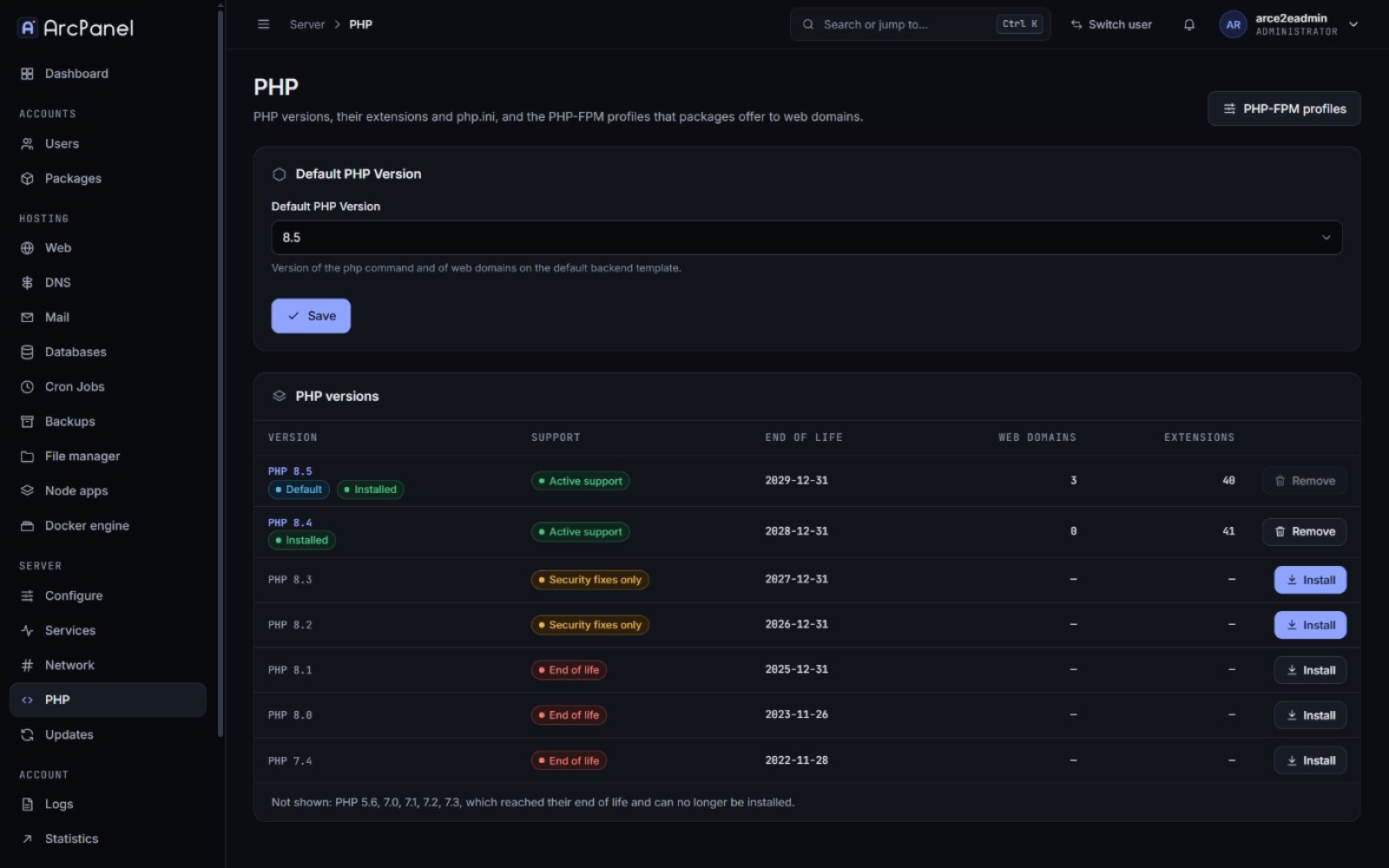
PHP Manager listing PHP 7.4 to 8.5 with support status, end-of-life date, web domains and extensions per version
PHP Manager. Every PHP version with its support status, end-of-life date, the domains on it and its extensions. A version in use or set as default cannot be removed by accident.
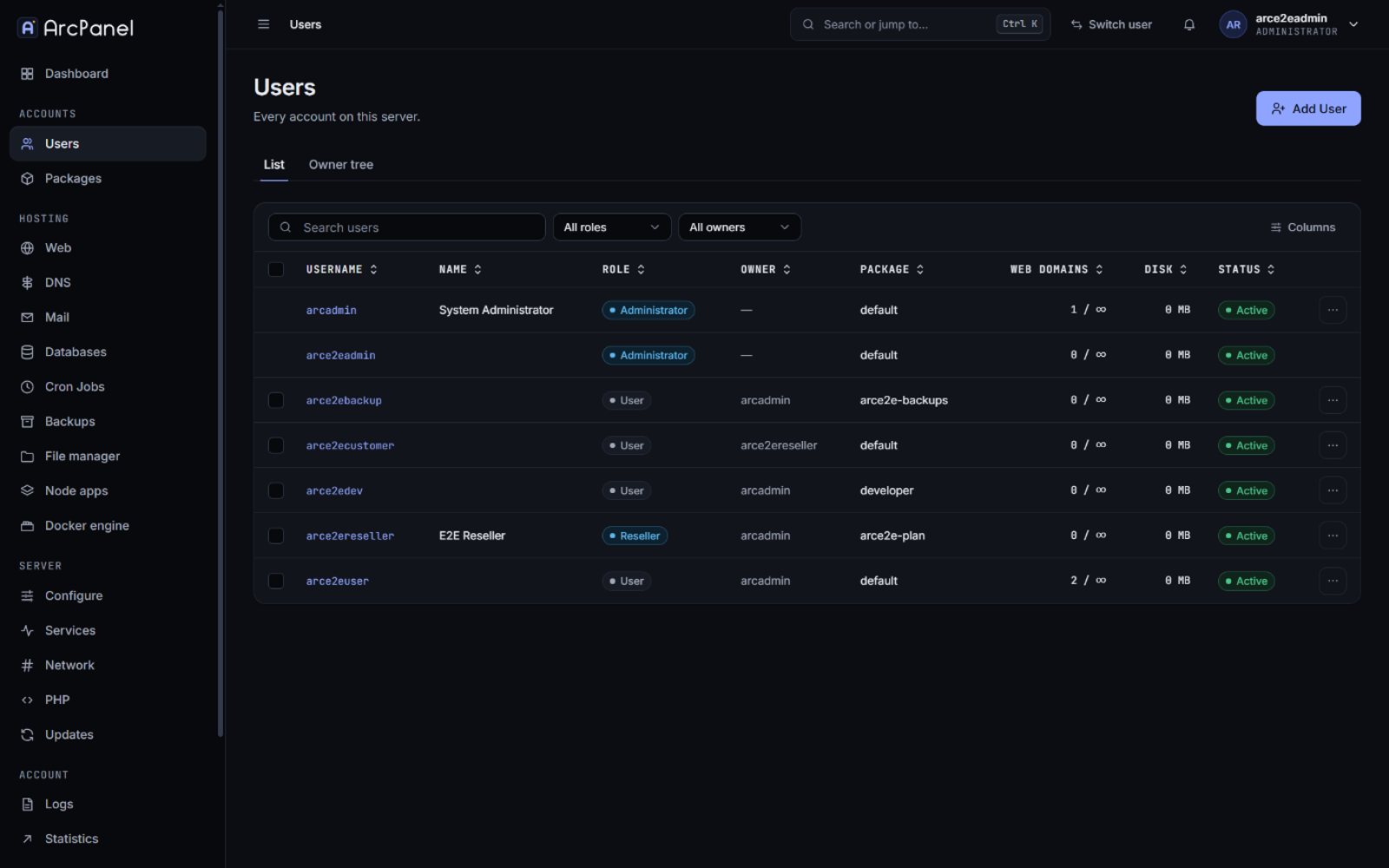
User list with administrator, reseller and user roles, each account's owner, package, web domain count and status
Users. Administrators, resellers and their customers in one list, each with an owner and a package. A reseller sees and manages only the accounts it owns.
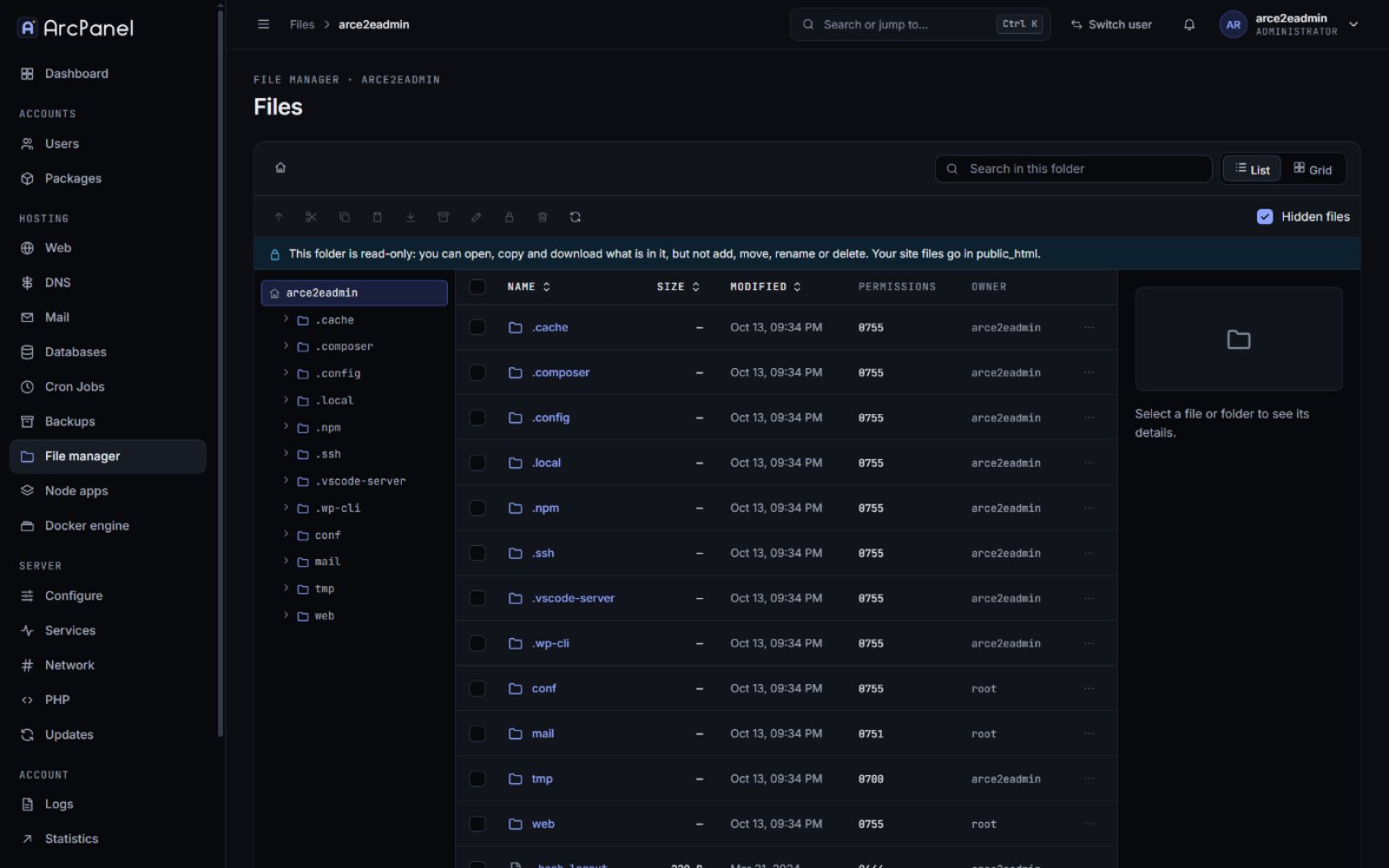
File manager with a folder tree, file list with size, modified date, permissions and owner, and a details panel
File Manager. Every file operation runs as the account’s own user, so what the panel can touch is exactly what that user could touch over SFTP.
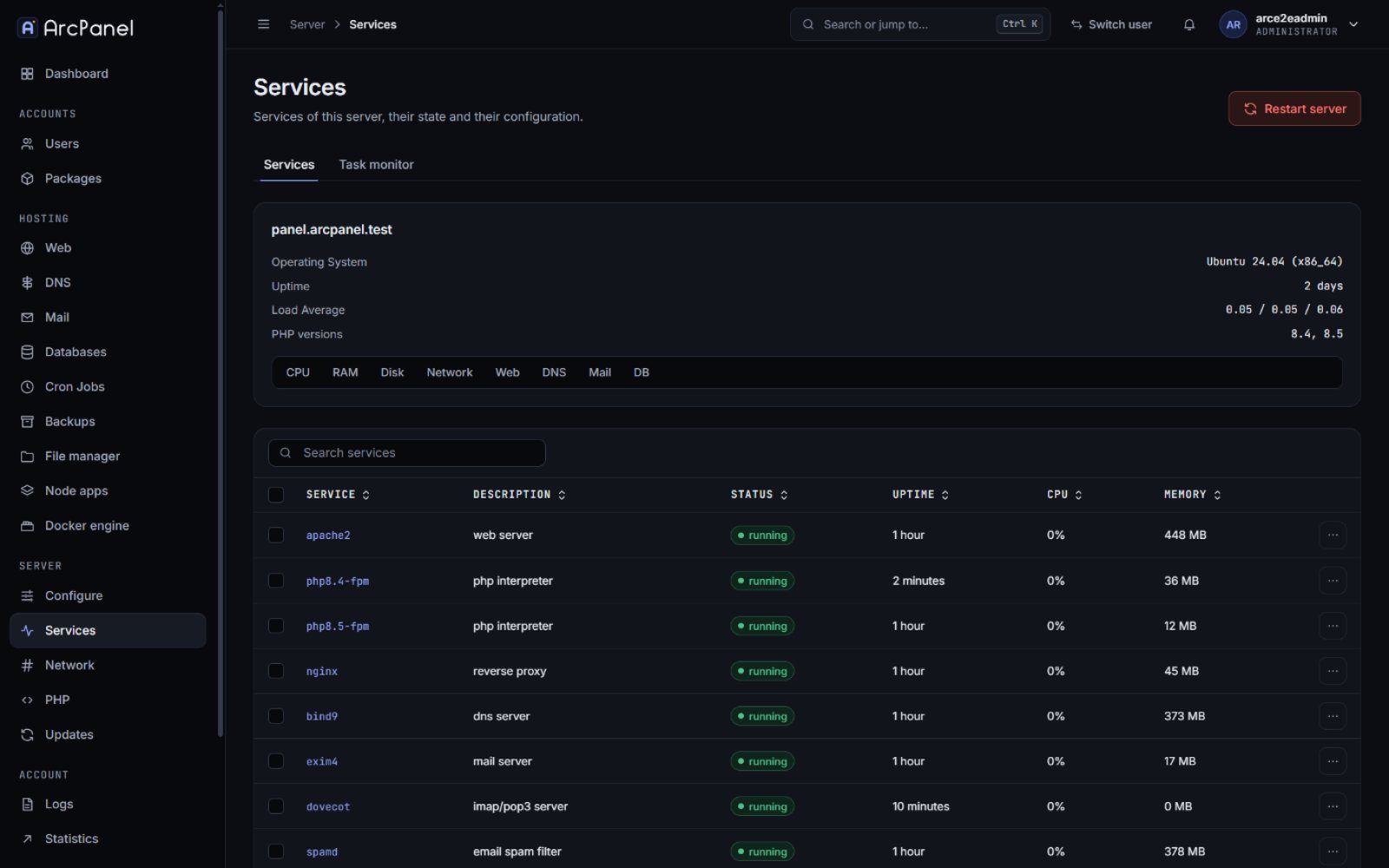
Services page with the host's operating system, uptime and load, then each managed service with status, uptime, CPU and memory
Services. The managed services of the host with their state, uptime, CPU and memory, next to the operating system and the PHP versions in use.
Decisions

Three calls that shaped it

The command line is the API The panel and the REST API call the same v-* commands. Anything the panel can do, a script can do, and there is one place where hosting state is written.
Fork, then stop merging Starting from HestiaCP kept years of hardened hosting scripts. Since 2.0 there are no upstream merges, so the interface and the data model can move without fighting a moving base.
Run as the user, not as root Files, Node.js apps and Docker containers run under the hosting account. One customer’s mistake stays inside that customer’s home directory.
Running your own servers, or need help moving to one? Follow the project on its own website, or talk to us about setup, migration from another panel, or custom work.